
Jarang Diketahui, Ini 7 Manfaat Kunyit Hitam bagi Kesehatan
Pernahkah Anda melihat kunyit hitam? Bahan herbal yang satu ini memang jarang ditemukan di Indonesia, tetapi kunyit hitam diketahui memiliki manfaat kesehatan yang tidak kalah dengan kunyit biasa. Simak apa saja manfaat kunyit hitam bagi kesehatan berikut ini.
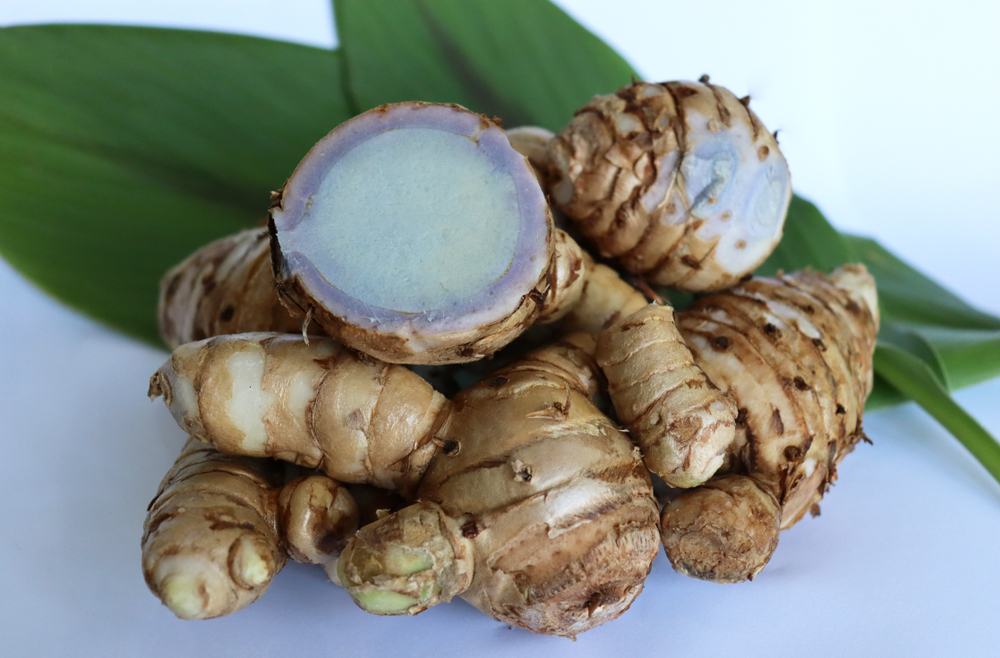
Kandungan kunyit hitam
Kunyit hitam atau dikenal dengan nama ilmiah Curcuma caesia adalah tanaman herbal yang banyak ditemukan di negara India dan Nepal.
Kunyit hitam sama-sama mengandung zat aktif yang berkhasiat seperti kunyit biasa.
Perbedaan di antara kunyit hitam dengan kunyit biasa terdapat pada warna di bagian dalamnya. Bagian dalam kunyit hitam berwarna biru gelap atau kehitaman, sedangkan kunyit biasa berwarna oranye atau kuning.
Bahan herbal ini populer digunakan dalam pengobatan alternatif untuk mengatasi berbagai penyakit. Hal ini karena kunyit hitam kaya akan senyawa fitokimia seperti:
- kurkumin,
- flavanoid,
- fenol,
- steroid,
- glikosida,
- saponin, dan
- tanin
Tak hanya itu, studi dalam jurnal Biochemical Systematics and Ecology mengungkapkan bahwa kunyit hitam mengandung berbagai mineral seperti zat besi, kalsium, kalium, natrium, magnesium serta fosfor.
Manfaat kunyit hitam untuk kesehatan
Berikut ini berbagai manfaat kunyit hitam untuk kesehatan tubuh.
1. Berpotensi mengobati radang sendi

Radang sendi (arthritis) menyebabkan sendi menjadi bengkak, kaku, dan nyeri sehingga menghambat aktivitas sehari-hari.
Studi dalam International Journal of Recent Scientific Research menyebutkan bahwa ekstrak etanol kunyit hitam memiliki manfaat untul mengobati penyakit radang sendi.
Hal ini karena kunyit hitam memiliki sifat anti-inflamasi yang mampu menghambat pertumbuhan prostaglandin dan menekan zat sitokin pemicu peradangan, seperti TNF dan NF-kB.
2. Menangkal radikal bebas
Selain dapat mengobati radang sendi, kunyit hitam punya khasiat menangkal radikal bebas.
Radikal bebas merupakan molekul berbahaya yang dapat menyebabkan kerusakan pada sel-sel tubuh dan berisiko memicu berbagai penyakit, seperti penyakit kardiovaskular, peradangan kronis, dan kanker.
Nah, akar dan daun kunyit hitam mengandung berbagai senyawa antioksidan seperti flavonoid, saponin, dan tanin yang dapat membantu menangkal radikal bebas.
3. Memiliki sifat antibakteri
Manfaat kunyit hitam lainnya berasal dari sifat antibakteri yang dimilikinya. Kunyit hitam mengandung senyawa kurkumin yang efektif untuk melawan bakteri Staphylococcus aureus.
Staphylococcus aureus adalah bakteri yang menyebabkan berbagai penyakit, seperti bisul, impetigo, selulitis, atau keracunan makanan.
Selain itu, studi dalam Tropical Journal of Natural Product Research mengungkapkan bahwa kombinasi ekstrak jahe merah dengan kunyit hitam mampu melawan bakteri Klebsiella pneumoniae yang kerap menyebabkan pneumonia.
4. Mengurangi risiko kanker
Manfaat kunyit hitam lainnya untuk kesehatan adalah berpotensi menurunkan risiko terkena penyakit kanker.
Hal ini disebutkan oleh sebuah penelitian yang diterbitkan dalam Journal of Indian Academy of Oral Medicine and Radiology.
Penelitian tersebut mengungkapkan bahwa kunyit hitam mengandung senyawa kurkumin yang dapat membantu mengontrol pertumbuhan sel kanker.
Kurkumin bekerja dengan menghambat peradangan, mengurangi stres oksidatif, dan mengatur gen yang berhubungan dengan pertumbuhan sel kanker.
5. Mengobati penyakit diabetes
Diabetes melitus merupakan penyakit yang ditandai dengan tingginya kadar gula darah. Nah, kunyit hitam ternyata membantu mengobati penyakit diabetes melitus.
Potensi manfaat kunyit hitam ini disebutkan studi dalam jurnal Oriental Pharmacy and Experimental Medicine.
Studi tersebut menyebutkan bahwa ekstrak kunyit hitam mampu menghambat enzim alpha amilase dan alpha glukosidase, yakni enzim yang berperan memecah karbohidrat menjadi gula.
Dengan menghambat kedua enzim tersebut, jumlah gula yang diserap oleh sistem pencernaan pun bisa berkurang. Hal ini dapat membantu mengontrol kadar gula darah.
6. Mempercepat proses penyembuhan luka
Kunyit hitam merupakan salah satu bahan herbal yang bermanfaat untuk membantu mempercepat proses penyembuhan luka.
Bahan herbal ini memiliki sifat anti-inflamasi yang mampu mengurangi peradangan pada luka.
Selain itu, sifat antibakterinya mampu mengurangi risiko infeksi bakteri pada luka. Dengan begitu, luka akan lebih cepat sembuh.
7. Membantu mengobati asma
Dalam pengobatan tradisional, kunyit hitam kerap digunakan sebagai obat herbal untuk mengatasi asma, yakni gangguan pernapasan akibat peradangan pada saluran pernapasan.
Kunyit hitam memiliki sifat anti-inflamasi yang mampu mengurangi peradangan pada saluran pernapasan sehingga mampu meredakan asma.
Studi dalam NeuroPharm Journal juga menyebutkan bahwa kunyit hitam mampu menstabilkan sel mast (mast cell) yang berperan dalam memicu reaksi alergi dan peradangan pada saluran pernapasan.
Hal ini membuat rempah herbal ini berpotensi untuk mencegah asma yang terkait dengan reaksi alergi.
Cara menggunakan kunyit hitam

Untuk mendapatkan khasiat kunyit hitam, Anda sebaiknya mengetahui cara memanfaatkannya.
Kunyit hitam biasanya tersedia dalam bentuk kering atau bubuk. Anda bisa menggunakan bubuk herbal ini sebagai penambah rasa alami untuk berbagai masakan,
Anda juga bisa mengonsumsi kunyit dengan cara direbus dan disaring airnya. Jika ingin yang lebih praktis, Anda bisa mengonsumsi suplemen herbal yang mengandung ekstrak kunyit hitam.
Namun, suplemen kunyit hitam dapat berinteraksi dengan obat-obatan tertentu.
Oleh karena itu, pastikan berkonsultasi terlebih dahulu dengan dokter jika ingin memanfaatkan bahan herbal apa pun untuk mengobati penyakit.
Kesimpulan
- Kunyit hitam adalah rempah herbal dengan ciri khas bagian dalam yang berwarna biru gelap atau kehitaman.
- Kunyit hitam memiliki berbagai manfaat kesehatan, seperti mengobati radang sendi, menangkal radikal bebas, memiliki sifat antibakteri, mengurangi risiko kanker, mengobati diabetes, dan mencegah asma.
- Kunyit hitam biasa diolah sebagai penambah rasa makanan, dikonsumsi dalam bentuk bubuk dan suplemen herbal.

